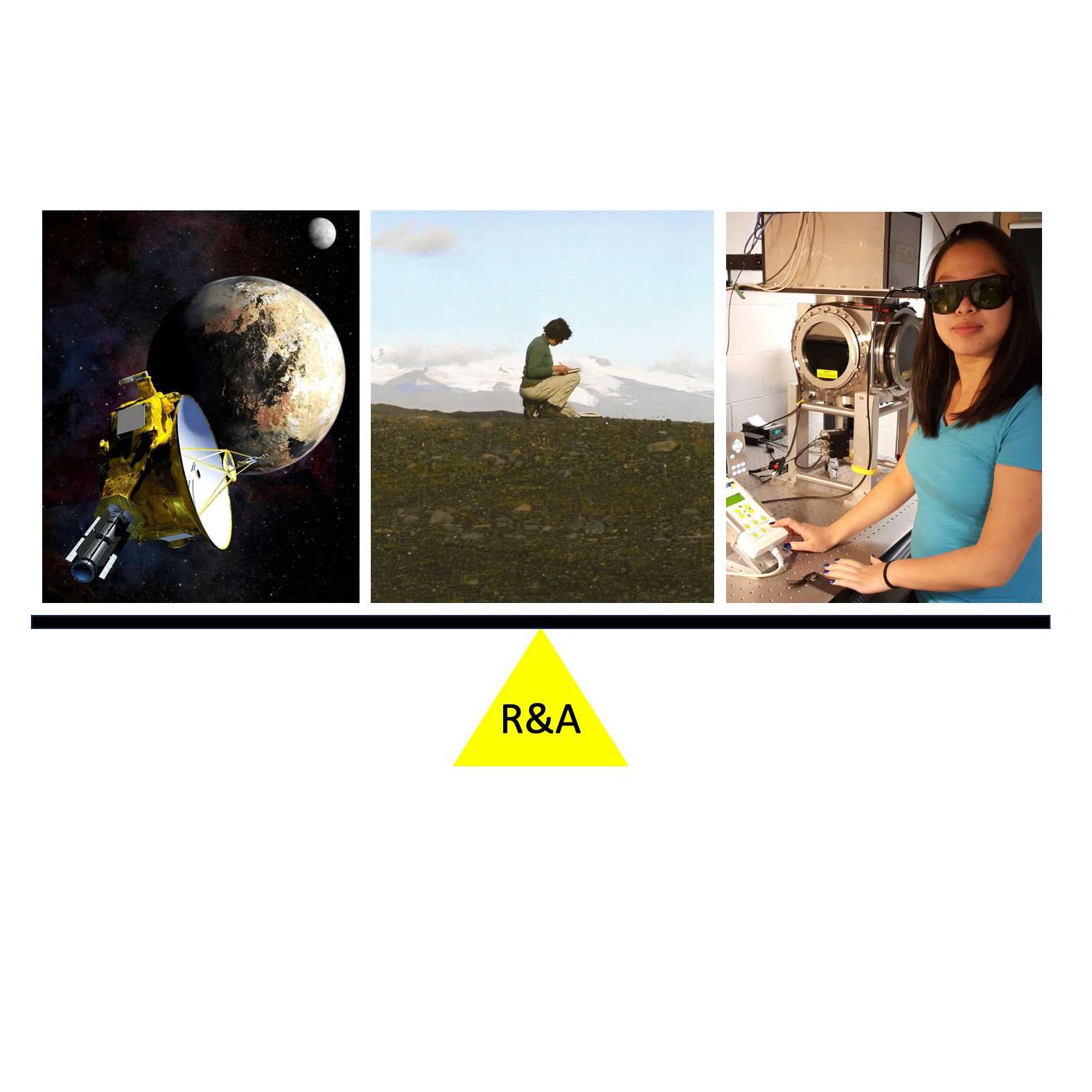
A recent investigative report on 15 years of NASA Planetary Research and Analysis (R&A) program funding showed relatively flat funding profile that conflicted with recommendations by NRC Planetary Decadal Surveys an by Congress. On the basis of documents received on September 23, 2026, in response to a Freedom of Information Act request, it is now clear that the costs incurred against those budgets in FY2025, as of June 30, 2026, were more than 50% lower than the amounts budgeted in the aggregate.
The historical R&A funding curves compared against planetary decadal and Congressional recommendations reported earlier now look like the following:
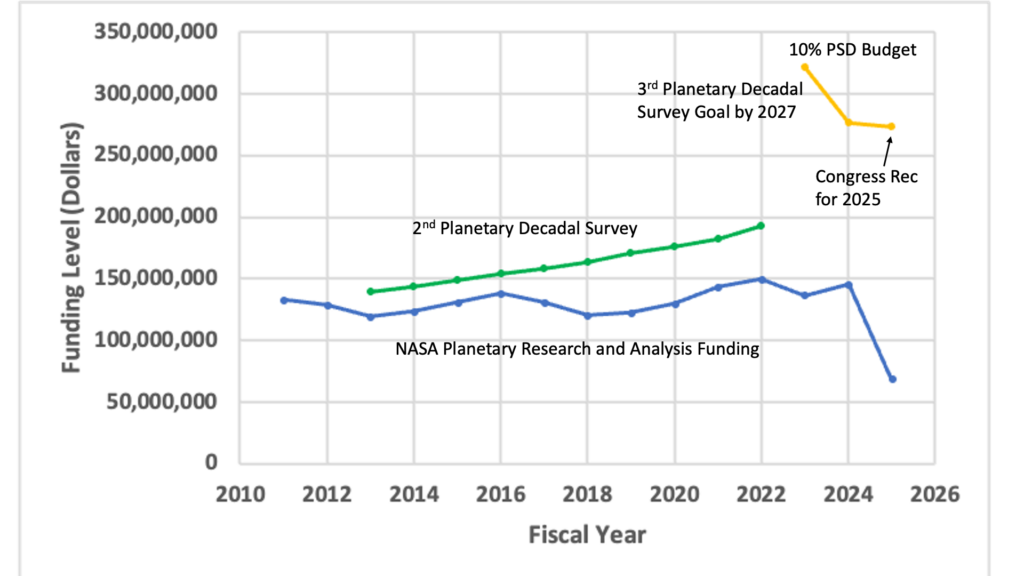
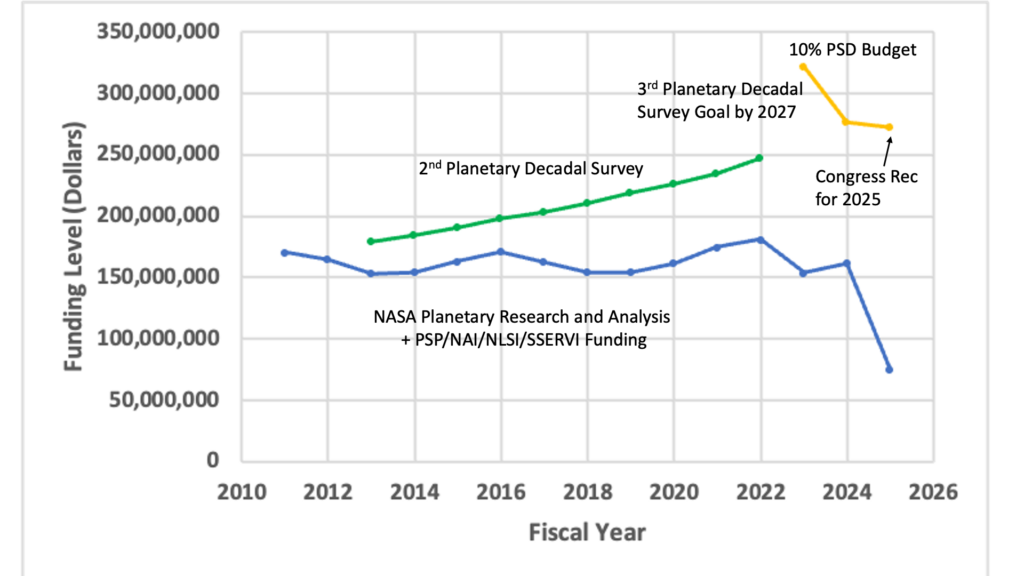
The excel spreadsheet provided the recent investigative report which includes a complete breakdown of the NASA Planetary Science Division budget FY2011-FY2025 including R&A program elements has been updated to include both budgeted and incurred cost information for FY2025 (RA_Funding_2011_2025_updated260925). The funding summary spreadsheet has been likewise updated (RA_Funding_Summary_updated260926) and the budget summary for FY2025 provided in Appendix C of the earlier investigative report is updated in the Appendix below. It is assumed that the fractional decrease in an R&A program element is the same as that of the budget line within which it resides.
The source document received from NASA thru FOIA is 26-00939-F-HQ Responsive Record.xlsx (September 23, 2026).
The recent investigative report painted a picture for the American planetary science community that was dire, with R&A funding, instead of increasing over fifteen years, actually declining in value against inflation by more than 30% over that period of time. The new information obtained by FOIA paints a picture that is catastrophic, requiring the immediate attention of Congress.
The planetary science community is something of a canary in the coal mine, because of its outsized reliance on openly competed NASA research and data analysis programs. This is a consequence of being a highly interdisciplinary scientific field largely invented in the last sixty years by NASA. Unlike other fields, it does not have deep historical roots in either academia or industry. These roots should grow more quickly given the rapid rise in novel exciting science being addressed by R&A work, modern missions, and thousands of new solar systems to explore and understand. It is breaking down the NASA stovepipes of Planetary Science, Earth Science, Astrophysics and Heliophysics. Under the current situation, it will be other nations that lead the way into an amazing future of new knowledge, new technology and new economic opportunity. Those nations are recruiting our scientists now.
The underspending of research budgets funded by Congress cannot be unique to NASA planetary science. I expect this is underway (despite protestations to the contrary by government officials) in every other area of federally funded basic research. Congress should be demanding this information, while at the same time not waiting to act to staunch the damage. Without such action, I expect we will not recover.
Efforts to obtain FY2006 information are underway.
Mark V. Sykes
Senior Scientist and Former CEO
Planetary Science Institute
NOTE: All opinions are those of the author and not the Planetary Science Institute.